Variability
Sometimes it is difficult to find a pattern because of blood glucose levels varying significantly either at specific times or across the day.
HbA1c reflects an average over the previous 2 – 3 months and can therefore seem very good if there are a lot of variabilities, as the high and low levels will cancel each other out. However, variability in blood glucose is now also thought to be a risk factor for complications.
Is the black/blue solid line: (median) line swinging up and down? If so, there are consistent swings between high and low blood glucose.
The following example shows what is sometimes known as a “rollercoaster”. Although the HbA1c is good, the blood glucose levels are consistently going high and low.
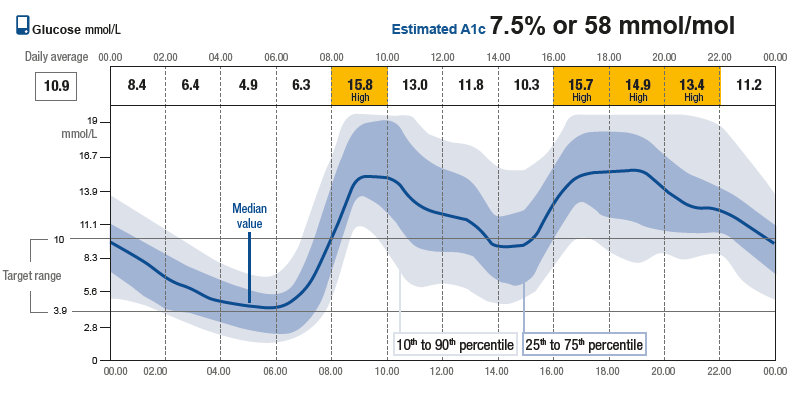
There are many factors that can contribute to the swings in blood glucose levels. Sometimes it may be difficult to pin down the exact reason for these highs and lows.
If you cannot easily work out why your blood glucose levels are varying a lot, you may find it helpful to go through your blood glucose on a day-to-day basis.
To try and get off the blood glucose ‘rollercoaster’, you may find it helpful to think about the timing of the highs and lows. We’ve put together some questions below that can help you identify some common issues with swings related to mealtimes and swings not related to mealtimes.
Swings related to mealtimes
 Insulin doses
- Have you missed doses of insulin?
- If you are carbohydrate counting, is your insulin to carbohydrate ratio correct?
- If you are carbohydrate counting, is your insulin correction dose correct?
- Are you over-correcting highs?
- Timing
- Have you given your insulin after a meal?
- Do you need to give your insulin a bit earlier before you eat?
 Carbohydrates
- Are you counting carbohydrates correctly?
Swings not related to mealtimes
 Overnight
- Is your background dose correct or are you dropping or rising overnight?
 Hypos
Hypos
- Are these happening at the same time / in the same circumstances?
- If you are seeing peaks after hypos, are you over-treating your hypos?
For further information on diabetes ‘rollercoasters’ have a look at the Diabetes Technology Network video below.