Insulin pump therapy is more suited to some people than others. There are a number of reasons that you might want to consider insulin pump therapy and a number of reasons why insulin pump therapy might not be right for you.
In the video below Mary, a diabetes specialist nurse discusses who might be best suited to an insulin pump.
Click below for further information about suitability for an insulin pump.
- Hypoglycaemia unawarenesss – You find it hard to notice when your blood sugar is going low or you don’t notice at all.
- Flexibility – You’d like more flexibility in your daily routine and how you manage your insulin.
- Pregnancy – You’re planning a pregnancy, or already pregnant and want better control of your blood glucose.
- Dawn phenomenon – This is if you wake up with high blood sugar levels, even though they were fine overnight.
- Diabetes management feels like a battle – You’re doing your best with injections, but still struggling to keep your diabetes under control.
- Count your carbohydrate intake accurately
- Have had some structured diabetes education
- If you are unwilling or unable to check finger prick glucose & ketone levels levels
- If you are not able to count carbohydrates accurately
- If you are unwilling or unable to maintain contact with your diabetes team
- f you have insufficient vision or hearing to allow recognition of alarms, there are vibration pads for under the pillow for when hearing aids are not in use at night time. This is something you can discuss with your Diabetes team
- If you have type 2 diabetes
- If you feel self-conscious or uncomforatble about wearing the device
- If you have physical limitations that will mean you cannot use the pump (e.g. dexterity issues due to arthritis)
- If you are unable to learn how to use the pump technically
- If you have previously had an eating disorder
Eligibility criteria
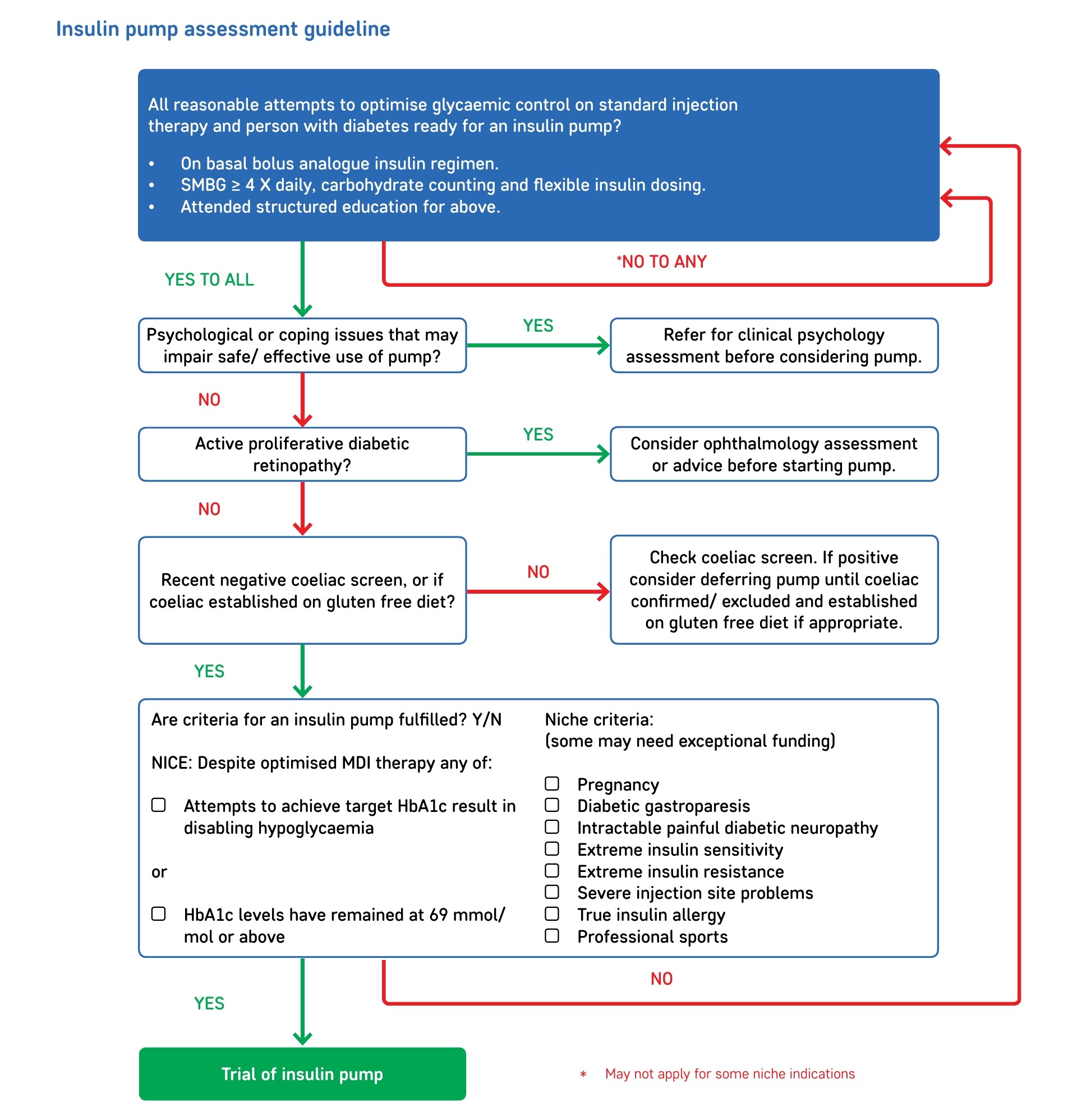
Eligibility guidelines for those who can get insulin pumps are produced by the National Institute of Health and Care Excellence (also known as NICE). These guidelines state that for adults:
 If you continue to have an HbA1c greater than 69 mmol/mol (8.5%) despite optimum use of multiple daily injections or
If you suffer from disabling hypoglycaemia you may be eligible for a pump.
Disabling hypoglycaemia is defined as the repeated and unpredictable occurrence of hypoglycaemia that results in persistent anxiety about recurrence and is associated with a significant adverse effect on the quality of life. Children under 12 years old are eligible when multiple daily injections are inappropriate or impractical.
Here are the healthcare professional assessment criteria as recommended by the Association of British Clinical Diabetologists’: