The sensor is the part of the CGM that measures glucose in your interstitial fluid, so applying it correctly is really important.
Choosing the site
You will want to choose an area of skin on the back of your upper arm that generally stays flat during normal daily activities, so it doesn’t bend or fold.
Other tips to follow when choosing your site are:
- Don’t use exactly the same site as the previous sensor to prevent any skin irritation or discomfort.
- Avoid any areas where you have a lot of hair, scarring, stretch marks, lumps, broken skin, scabs, cuts, scrapes or moles.
- Choose a site that is at least 2.5cm (1 inch) away from a site where you inject insulin.
- People wear sensors on many parts of the body, including the abdomen, buttocks, hips, legs, arms, and forearms. Choose an area that has enough fat to “pinch”, and an area that is comfortable for you.
Skin preparation
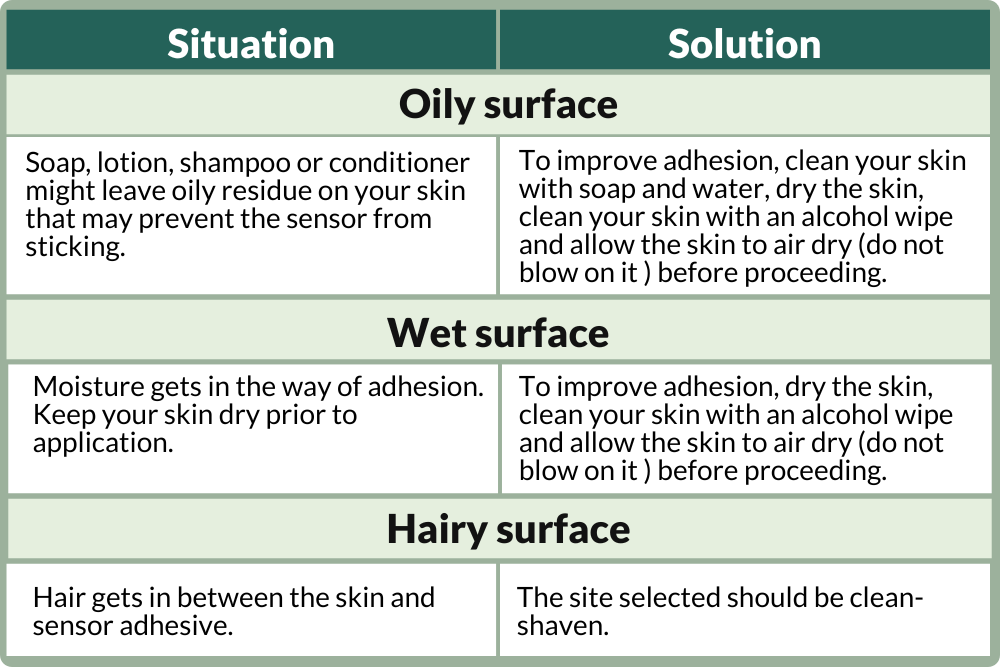
Preparing your skin is important to help the sensor stick properly. The following table gives you some solutions to some common problems that prevent adhesion:
Applying the sensor
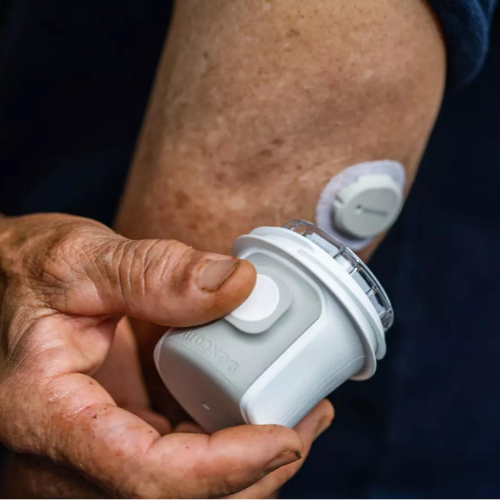
Once you’ve prepared your skin, you’re ready to apply your sensor. Apply the sensor according to the manufacturer’s instructions. Make sure the sensor is securely applied to your skin.
Sensor adhesion
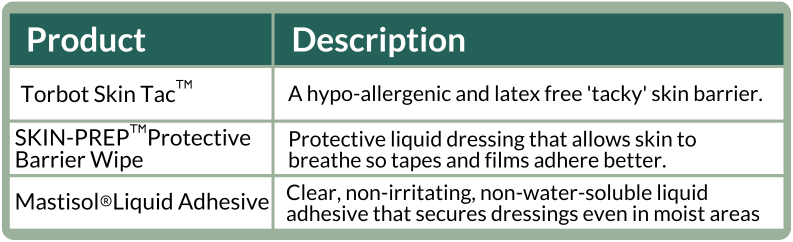
You may find that you need additional products to help keep the sensor stuck down. There are many adhesive patches and ‘guards’ available online that help keep the sensor in place.
The following products can help with sensor adhesion. You may need to try a few before finding the one that best suits you and your skin. If you are in any doubt, then speak to your diabetes care team for further guidance.
Sensor removal
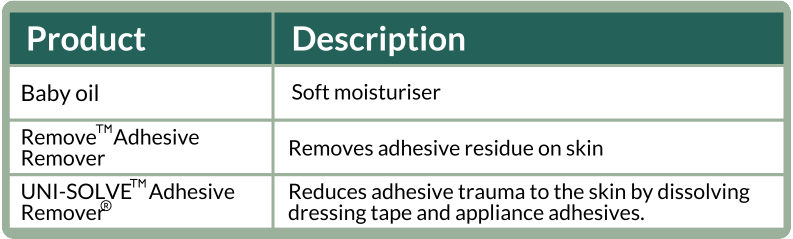
If any adhesive remains on your skin after removing the sensor, the following products may help. Remember that everyone’s skin is different, so find the one that works best for you.
Top tips for wearing your sensor
Depending on your CGM, the sensors are designed to be worn between 7-14 days. Some useful tips for wearing your sensor are:

Be careful about bumping into objects: Avoid bumping or catching your sensor on door frames, car doors, furniture, people, pets or other hard objects.

Touching the sensor adhesive: Avoid touching, pushing or pulling on the sensor. Also, you should avoid touching, scratching or pulling on the adhesive around the sensor, even if the adhesive has begun to peel.

Getting dressed: Use extra care to avoid hitting or catching the sensor on clothing while getting dressed. Avoid wearing tight clothing on your arms as doing so may pull off the sensor.

Showering/bathing: The sensor is water-resistant but use extra care when cleaning around the sensor and when towelling off so that you do not catch or pull off the sensor.

Contact sports: Avoid contact sports and heavy exercise with an activity that may knock off your sensor.