Calculating your basal rate
As we mentioned before, basal is the “background” insulin that you need throughout the day and night to maintain your target blood glucose values when you are not eating. Your basal insulin accounts for approximately one-half of your daily insulin requirements.
Your insulin pump mimics a pancreas by delivering insulin continuously over 24 hours. Your basal insulin is delivered hourly and the rate (how much insulin is given) can be pre-programmed with different rates (speeds of delivery) at different times of the day to suit your individual needs. You are likely to need approximately 25–30% less insulin on a pump than your previous requirements when injecting, because of the way the insulin is delivered.
Follow the steps below to calculate your hourly basal rate (this calculation is also available in a printable worksheet here):
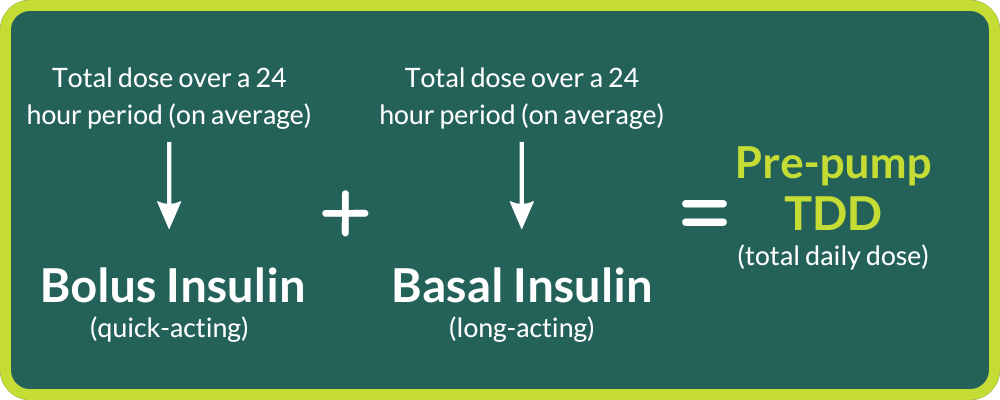
Step 1 – Calculate your average pre-pump total daily dose:
To do this, combine your total bolus insulin injections and your basal insulin injections over a 24-hour period.
Step 2 – Calculate your total daily pump dose:
To do this, reduce the daily pre-pump dose (pre-pump TDD) by 25%.

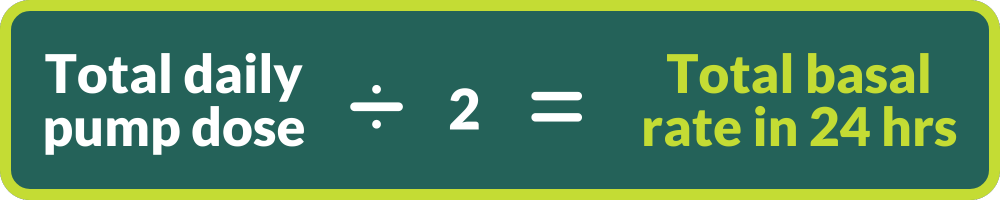
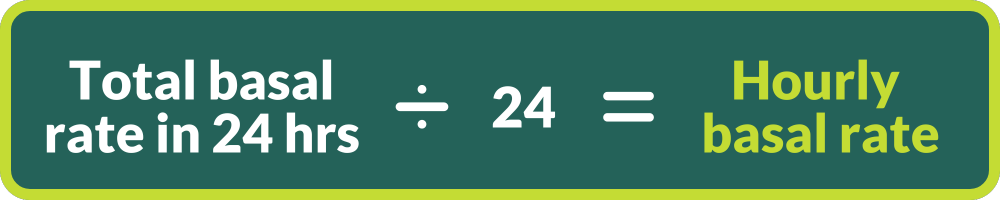
Step 3- Calculate your total basal rate in 24 hours and your hourly basal rate:
Total basal rate in 24 hours – divide your total daily pump dose by 2.
Hourly basal rate – divide your total basal rate in 24 hours by 24.
For example:
 Jamie has injected a total of 23 units of bolus insulin and 20 units of basal insulin over a 24-hour period. He needs to work out his hourly basal rate for his insulin pump.
Step 1 – He calculates his average pre-pump total daily dose.
Step 2 – From this he can calculate his total daily pump dose.
Step 3 – He then calculates his total basal rate in 24 hours
Step 4 – and from that, his hourly basal rate
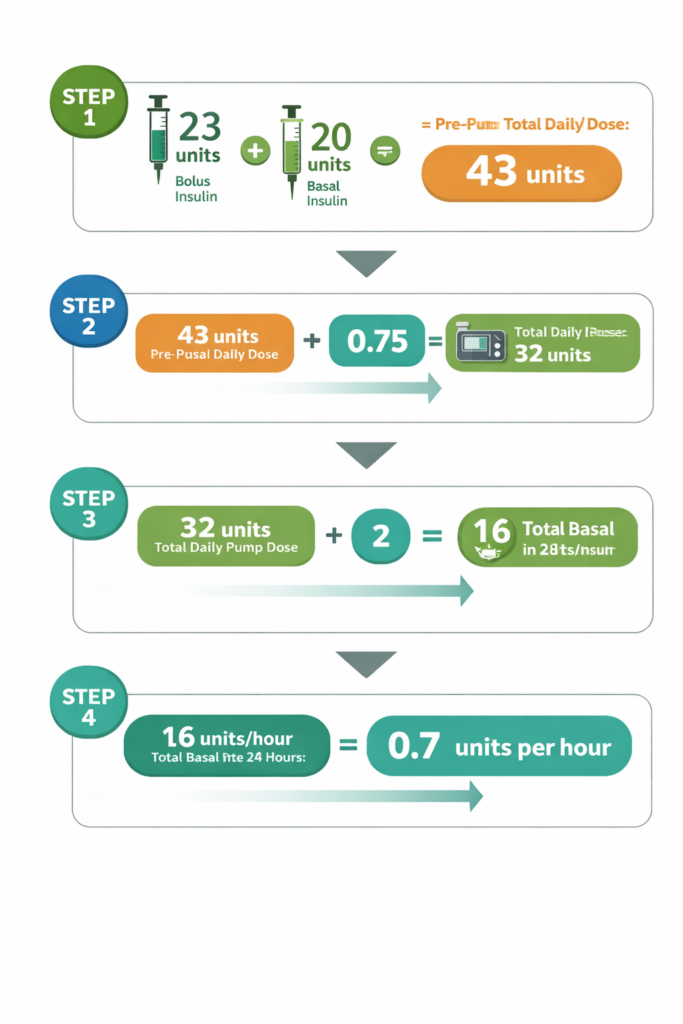
So, Jamie’s hourly basal rate is 0.7 units/hour.
This can seem complicated, but your diabetes team will support you in the calculation and may suggest slight modifications based on your experience with diabetes.
It is usual to start with a flat basal rate, but you and your diabetes team may decide differently. The pump can deliver different basal rates over the 24-hour period. These will be determined according to your individual needs over the next few weeks. Most people will eventually have between 1 and 6 different basal rates over 24 hours.
Change
“your target blood glucose values”
to
“your target glucose values”