Making a decision about which insulin pump for you is a personal choice and with any decision, there are always pros and cons.
Advantages
There are a few advantages of patch pumps compared to tethered insulin pumps. Click below to find out more:
The most obvious advantage of a patch pump is the lack of wires and tubing. Wires can get tangled or caught up, or you can get bubbles in them if you haven’t primed all of the air out.
Both of these can lead to issues with the delivery of insulin so you may not get the full insulin dose you intended.
The other thing people like about the patch pump is the freedom of movement that it gives in daily lives. For example when you wake up, doing exercise or when you go to the bathroom, you don’t need to worry about where your pump is or that the wires are tangled or pulling.
The other big benefit to a patch pump is water resistance which means you don’t need to disconnect when going for a shower.
Standard insulin pumps will need to be disconnected when going for a shower, however, with patch pumps you don’t need to do this. Some patch pumps are also fully waterproof which means you don’t even need to disconnect when going swimming, however, it’s a good idea to check the adhesive after swimming just to make sure it hasn’t become loose.
The cannula is hidden and is easy to insert with the touch of a button.
Depending on the model of the pump, the button to insert the cannula is either on the remote unit or directly on the reservoir patch. For some people that really dislike needles and find this part of diabetes management distressing, it can be very comforting that the cannula needle is hidden.
Patch pumps tend to be smaller so are more discreet to wear compared to the visible infusion sets of traditional pumps.
As you wear the pump directly on your skin, you don’t need to attach it to a waistband or put it in a pocket. This can make going about your daily life much easier and give you less to think about.
Patch pumps usually have advanced functions.
Generally, you can expect some advanced functions with patch pumps such as integrated blood glucose monitoring or continuous glucose monitoring, bolus calculators, programming of insulin delivery for meals or integrated calorie databases to make carb counting a lot easier.
Disadvantages
Compared to a tethered insulin pump, there are a few disadvantages with patch pump. Click below to find out more:
Having a remote unit can be a negative for some people as it’s another thing you have to remember not to leave the house without.
When you have diabetes there is already a list of things you need to remember to always carry with you. For some people, having a separate handset so that you can deliver bolus insulin can be a bit frustrating.
However, some patch pumps do let you deliver bolus insulin on the pump directly, so if this is something that puts you off a patch pump, it’s worth looking at the exact features of each model.
The surface area for the adhesive is quite large which can cause skin irritation for some people.
This isn’t an issue that everyone with a patch pump experiences, however, some people can find their skin becomes irritated due to the adhesive. Some people have found using a different adhesive that is latex-free, zinc oxide-based can help with skin irritation.
The surface area for the adhesive is quite large which can cause skin irritation for some people.
This isn’t an issue that everyone with a patch pump experiences, however, some people can find their skin becomes irritated due to the adhesive. Some people have found using a different adhesive that is latex-free, zinc oxide-based can help with skin irritation.
Using larger boluses of insulin from patch pumps is not ideal as the boluses are not always absorbed very predictably.
If you use more than 6 – 7 units of bolus, then it is necessary to give the bolus over 30 minutes. This can be tricky to remember.
As the pods or reservoirs are single-use, there is more waste than there is with a traditional insulin pump.
With patch pumps, all of the pods, batteries and plastic materials are designed to be used only once so there is more waste than there is with a standard insulin pump. If the cannula becomes loose and needs to be reinserted then you would need to use a whole new pod rather than just reconnecting it.
Patch pumps are more expensive than traditional pumps so their availability varies across the UK.
Patch pumps come with more consumables than a traditional insulin pump so the costs are generally higher for them. This means that they are not always available in your region through the NHS.
As the infusion site is not visible you may not pick up on any problems as quickly.
The infusion site is covered by the pod so you may not spot signs of infection as quickly as you would do with a traditional insulin pump.
Comparing pumps
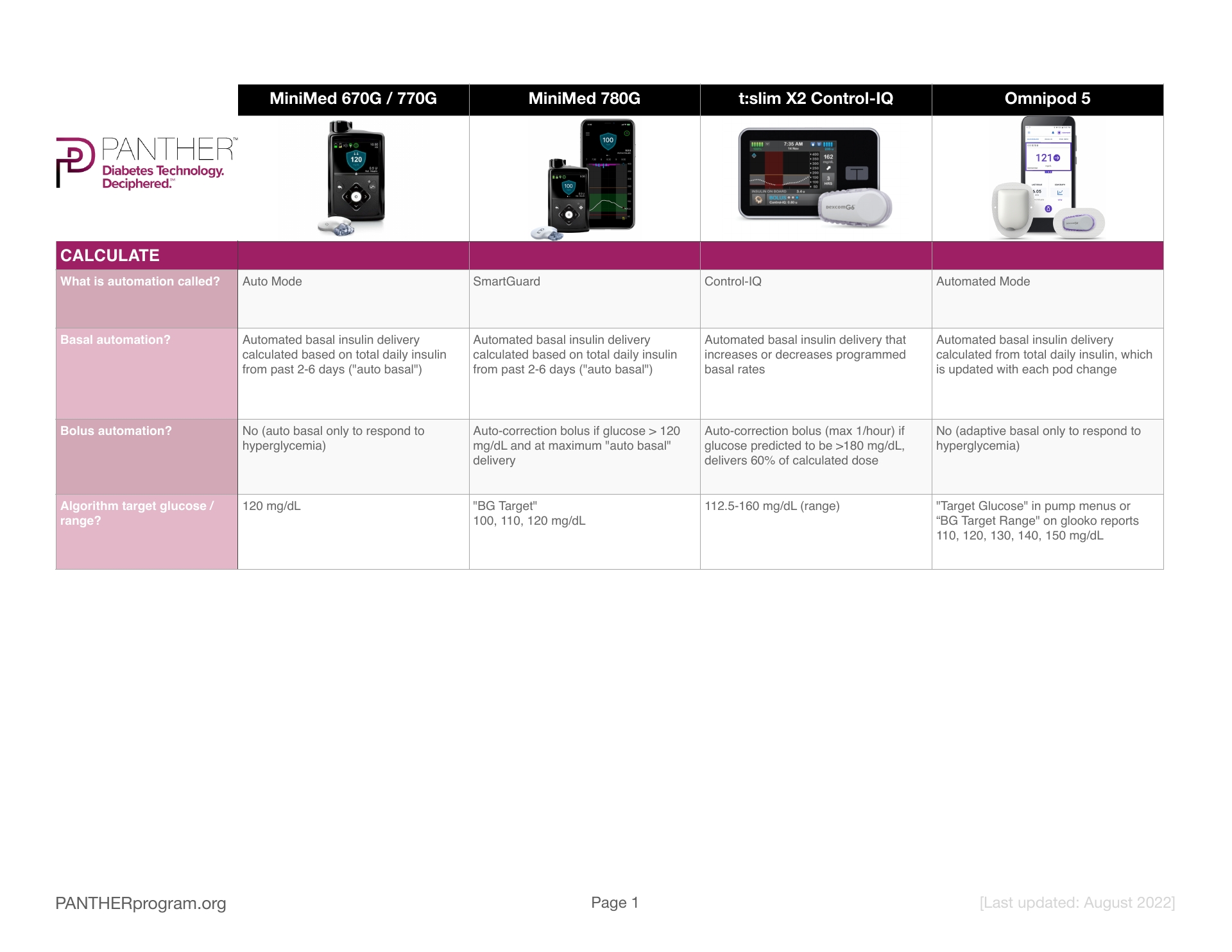
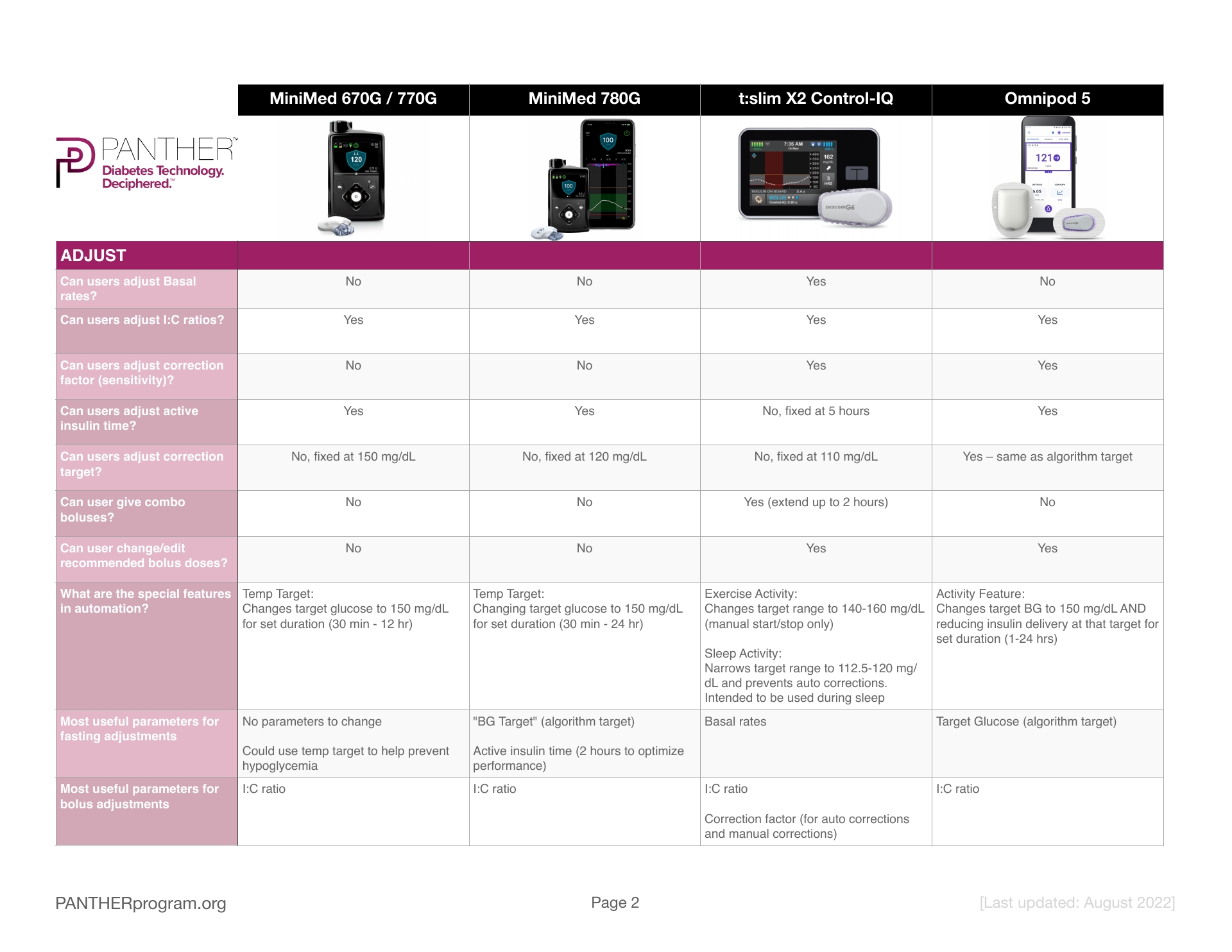
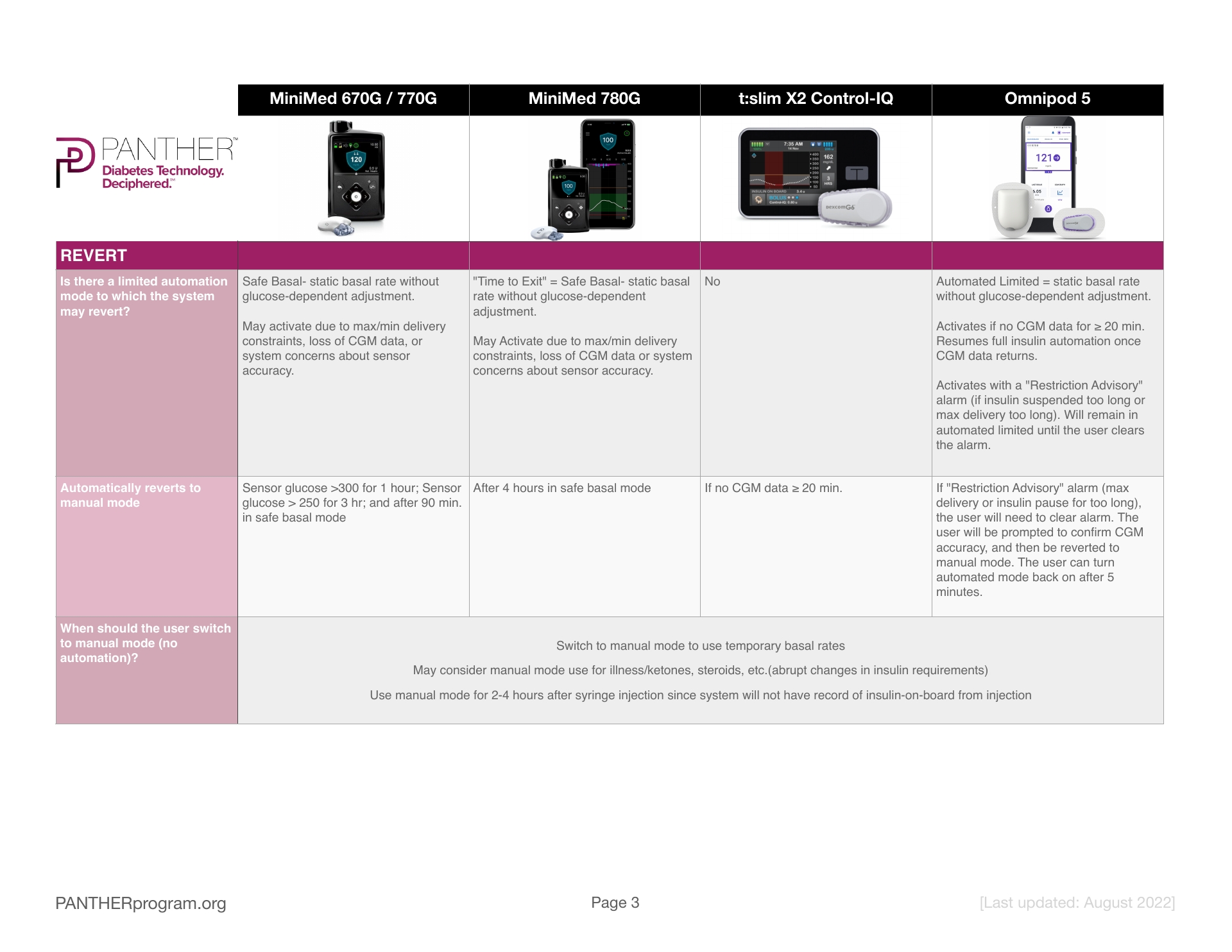
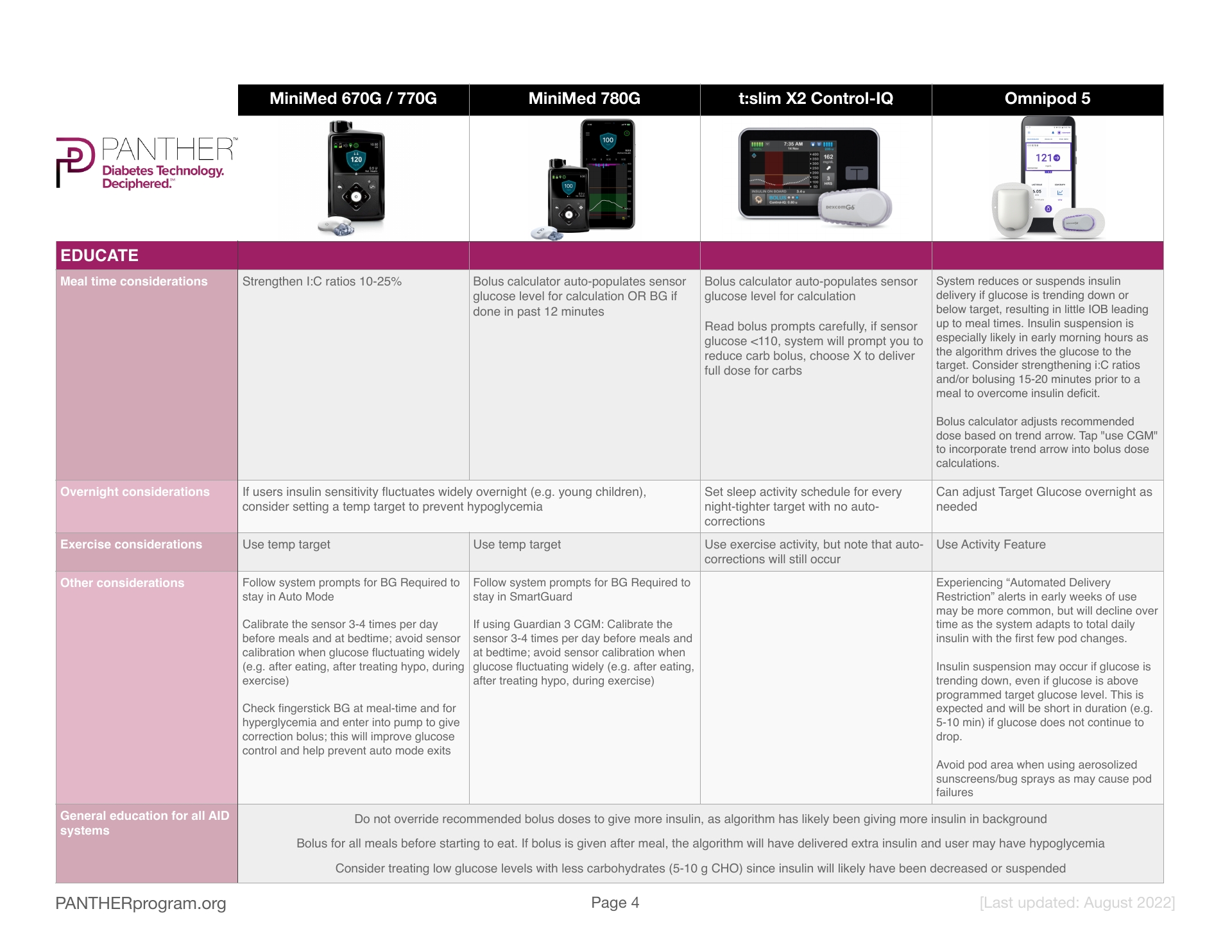
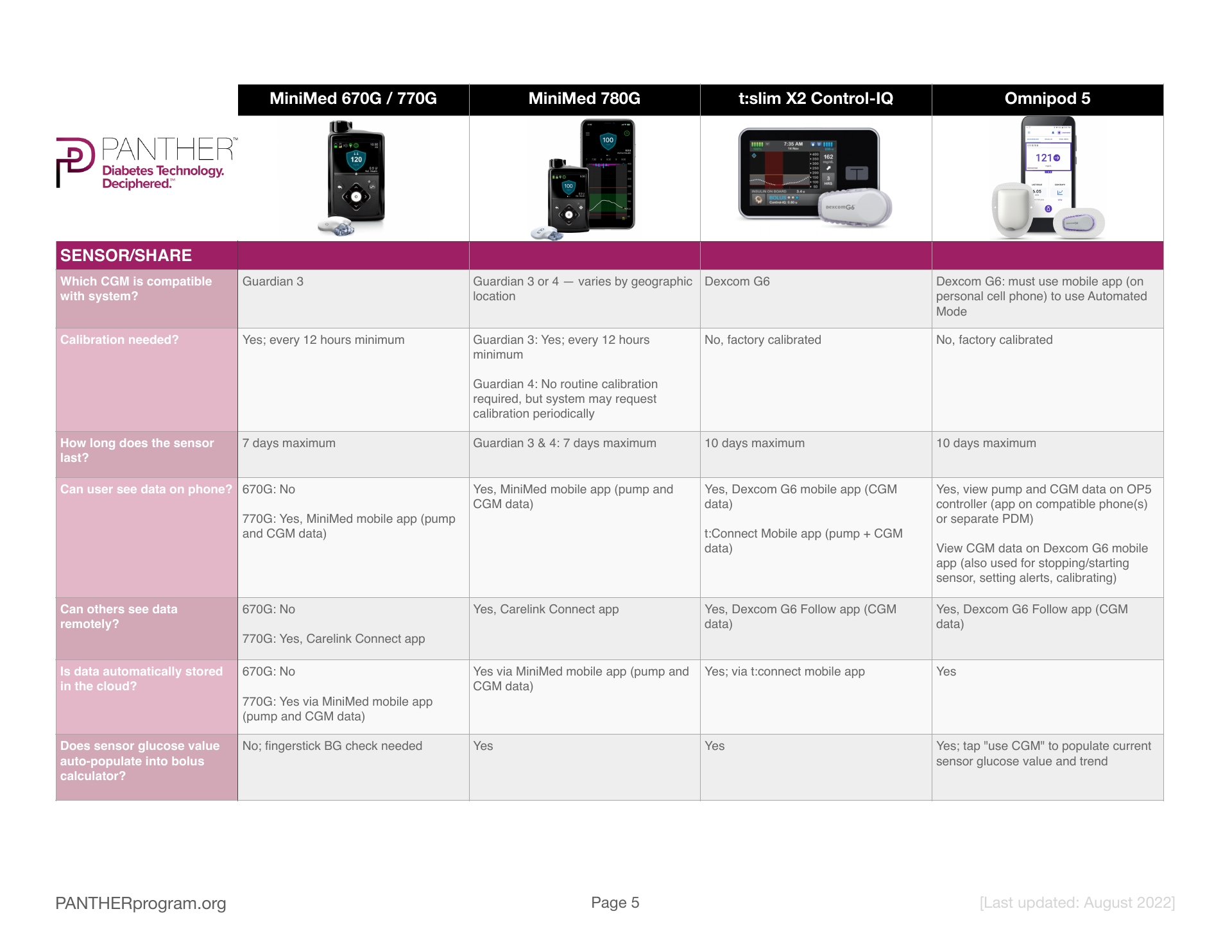
The pdf below details all of the features of insulin pumps available in a table for comparison. Use the arrows to click through the slides.
To continue, please click on the quiz below.